Item added to cart ×

Hosa Announces Category 6 Network Cables

Hosa Announces Category 6 Network Cables

The ideal solution for today’s high-speed networks

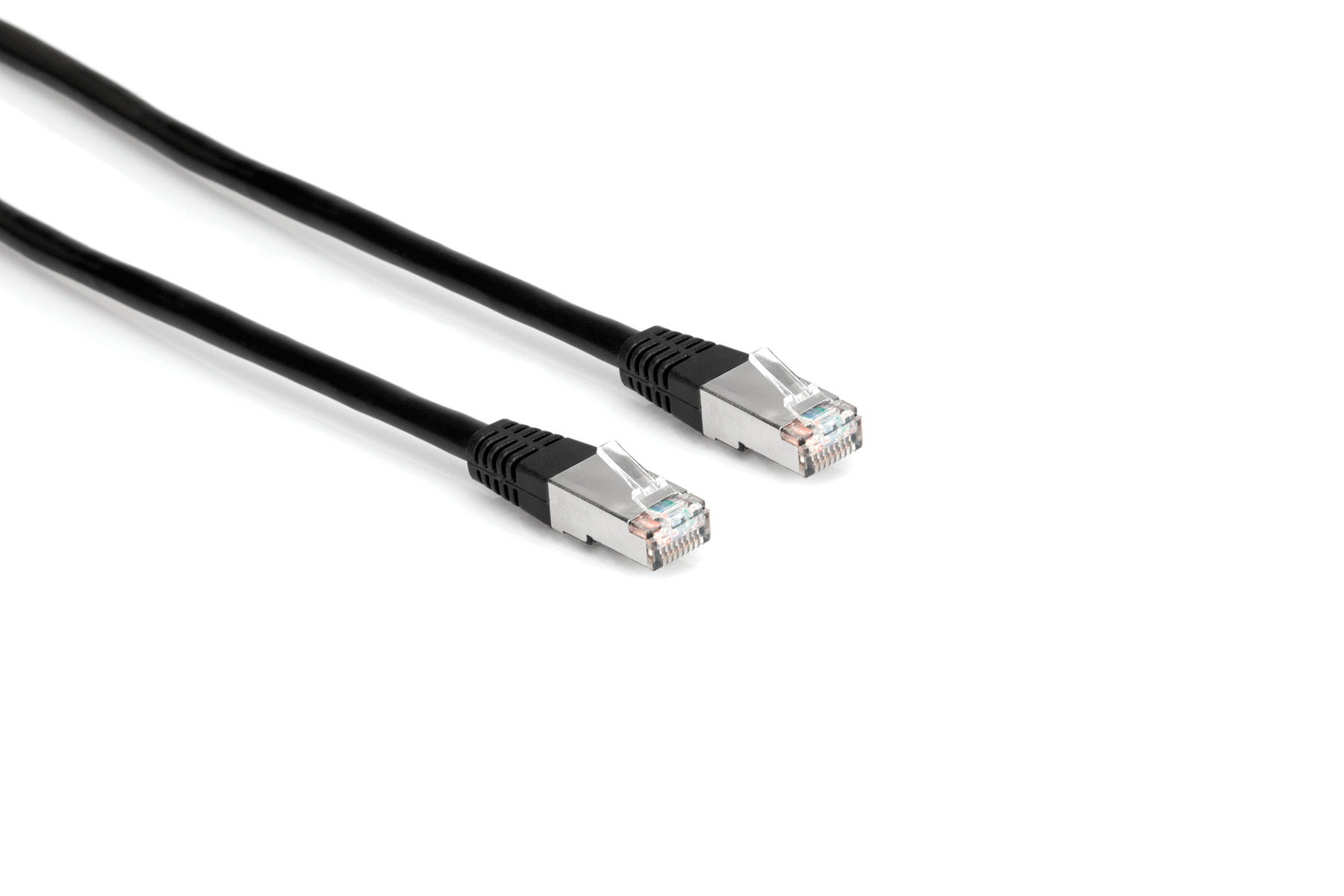
Buena Park, CA, September 2015 — Hosa Technology, Inc., the leading innovator of analog and digital connectivity solutions for the audio and video professional, is pleased to introduce the CAT-600BK Series Category 6 Network Cables. Superior construction and Hosa dependability make these cables ideal for the networks of today.

Featuring 24 AWG Oxygen-Free Copper (OFC) conductors for increased signal flow, CAT-600BK Series Category 6 Network Cables provide the best throughput in today’s high-speed networks. Tested to meet ANSI/TIA standards, Hosa’s Cat 6 Network Cables reduce crosstalk and return loss while increasing signal-to-noise ratio.

To further minimize interference, Hosa CAT-600BK Series cables utilize S/FTP construction, shielding each twisted pair as well as the overall cable. This construction makes Hosa’s network cables ideal in audio and video networks such as HDBaseT.

Jose Gonzalez, Hosa Technology’s Product Manager, commented on the new CAT-600BK Series network cables, “Hosa has long been recognized as a leader in cable products and our new CAT-600BK Series cables extend this tradition. With S/FTP construction and 24 AWG oxygen-free copper conductors, these cables offer maximum signal transmission with minimal interference and are bound to find their way onto many of today’s high-speed Ethernet and A/V networks.”

The Hosa CAT-600BK Series Category 6 Network Cables are available now. MSRP ranges from $10.50 to $193.05.

- Hosa

Hosa Reaches Distribution Deal with Roland Canada

Partnership delivers quality products and professional service to Canadian markets

Buena Park, CA, August 2015 — Hosa Technology, the leading innovator of analog and digital connectivity solutions for the modern musician, is proud to appoint Roland Canada as its new exclusive Canadian distributor. The agreement went into effect July 2015 and encompasses all lines under the Hosa Technology umbrella.

Established in 1981, Roland Canada is a leader in electronic instrument distribution in Canada. Utilizing a knowledgeable and professional sales team, the company delivers superior products, service, and support to the Canadian Musical Instrument, Professional A/V, and Consumer Electronics markets. With such a large assortment of connectivity solutions, Hosa is the ideal partner for Roland’s innovative musical products.

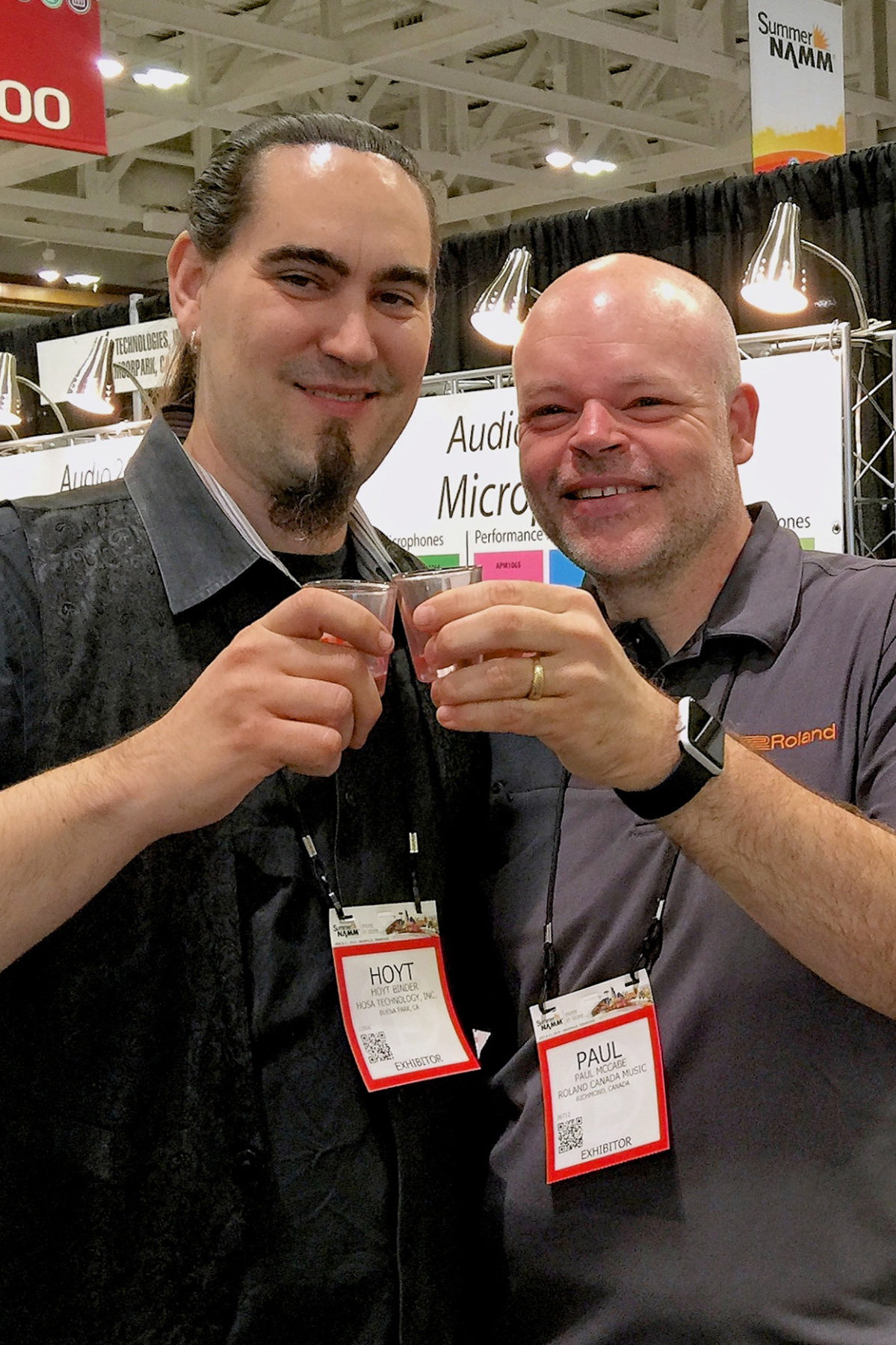
Paul McCabe, CEO of Roland Canada, commented on the new distribution agreement. “As part of our drive towards being the best supplier of inspiring creative technologies in Canada, we’ve had a long-held desire to provide retailers and consumers with fully-considered solutions complete with all necessary audio, video, and MIDI/data connections,” said McCabe. “With the world’s most comprehensive catalog of cables, connectors, adaptors, and additional accessories, combined with unmatched quality in products and services, Hosa Technology represents the perfect complement to our total-solution approach. We are excited and honored that Hosa has chosen to enter into this partnership with us.”

Jonathan Pusey, Hosa’s VP of Sales & Marketing, was equally enthusiastic about the new relationship, “For more than 30 years, Hosa has served the needs of performing musicians, recording studios, and video professionals & enthusiasts by providing innovative, high-quality, and high-value connectivity solutions. We’ve challenged ourselves to keep pace with advances in technology, and to support our products with service which is second to none. From our experience working in partnership with Roland in Australia, we have come to learn that our companies share very similar goals and values, and are very happy to now have this chance to work together with Roland Canada.”

For more information about Roland Canada, visit the company online at www.roland.ca.

- Hosa

Hosa Names Audio Geer as 2014 Rep of the Year

Exceptional performance for both Hosa and Mogan Microphones lines

Buena Park, CA – March 2015… Hosa Technology, the leading innovator of analog and digital connectivity solutions for the modern musician, is pleased to announce that it has named Audio Geer as its 2014 Rep of the Year award winner. This year’s winner is recognized for exceptional performance with two of the company’s core product lines: Hosa Technology and Mogan Microphones. The two awards were presented at one of the company’s numerous functions during the recent Winter NAMM Show in Anaheim, CA.

Hosa Technology’s Rep of the Year award is for “comprehensive excellence in sales.” The company weighs numerous factors as part of its selection criteria, including having surpassed both monthly and yearly sales goals, exhibiting best-in-class communication skills, and regularly opening new market opportunities. The Mogan Microphones Rep of the Year award is focused solely on highest net sales.

Southern CA-based Audio Geer, which represents a variety of manufacturers spanning the MI, Pro Audio, Commercial AV, and Broadcast markets, was represented by company president Alan Geer during the awards presentation. In response to his firm’s selection for both the Hosa and Mogan awards, Geer offered the following comments, “We are so pleased to have won both of these prestigious awards from our friends at Hosa Technology. After many years of working closely together to grow our businesses, it’s awesome to be recognized as being more effective now than ever. We are most appreciative of this recognition.”

Jonathan Pusey, Hosa’s Vice President of Sales and Marketing, was equally enthusiastic. “We are delighted to be working with Alan and everyone else at Audio Geer,” Pusey said. “I would also like to express my pride in bringing these awards back to SoCal, where we’re all based. All of us at Hosa recognize the hard work and effort put forth by Alan’s team and for their excellence in every facet of sales, not just the numbers. Their professionalism, enthusiasm, and integrity are impressive and all of us at Hosa look forward to a long and mutually beneficial business partnership. Congratulations to the entire Audio Geer team.”

For additional information about Audio Geer, visit the company website at www.audiogeer.com.

- Hosa

Hosa Announces Relaunch of Zaolla Silverline

Superior build, attention to detail, and use of premium materials are brand hallmarks

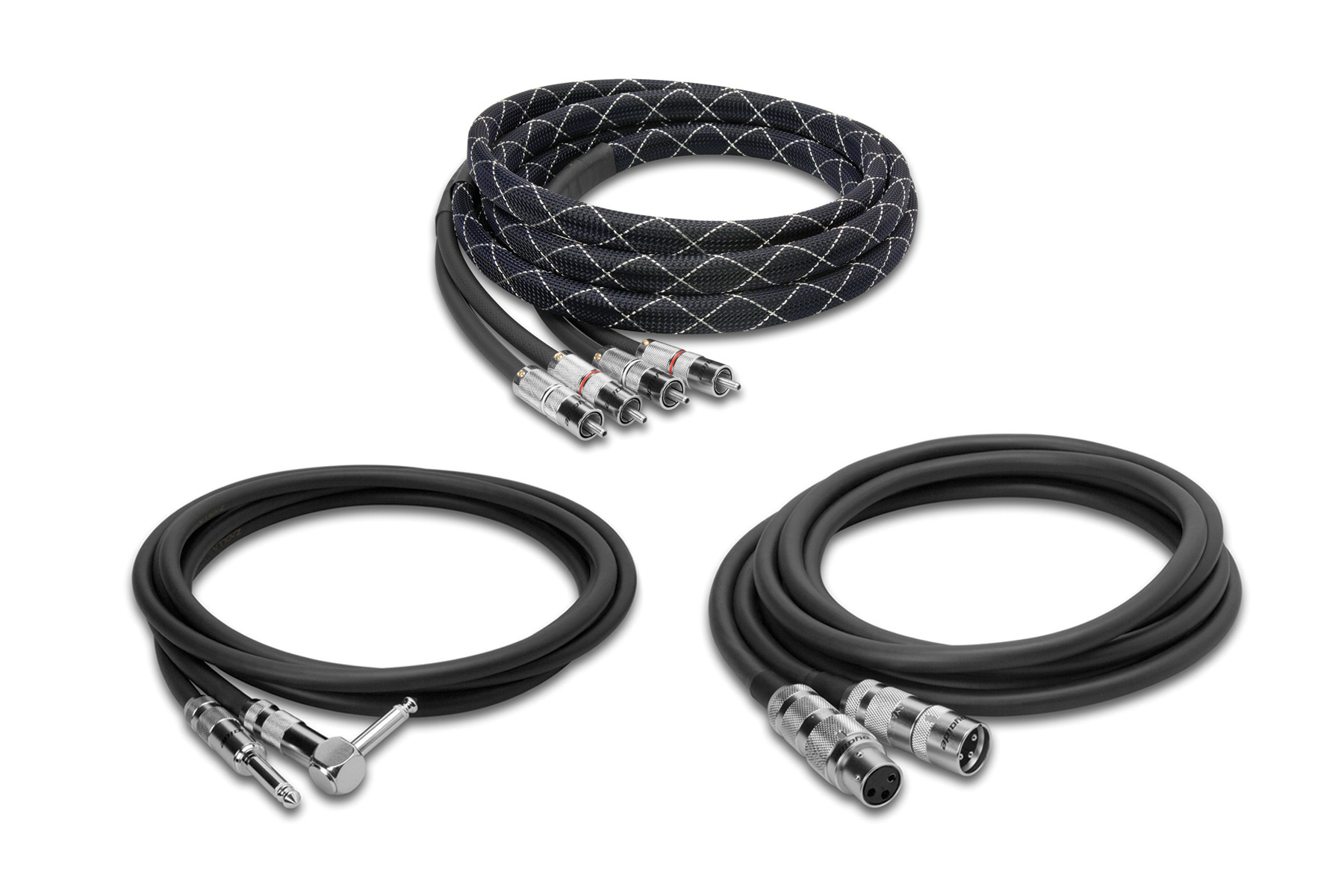
Buena Park, CA – February 2015… Hosa Technology, the leading innovator of analog and digital connectivity solutions for the modern musician, is pleased to announce the re-launch of the Zaolla Silverline brand. A division of Hosa Technology, the Zaolla Silverline catalog encompasses guitar and microphone cables, analog interconnects, and digital audio cables and snakes—all designed to provide the most transparent signal transfer possible. Featuring solid-silver conductors and premium connectors, Zaolla cables exhibit superior build quality and the highest level of attention to detail.

As a premium product line, Zaolla Silverline was created for the professional who understands that every piece of equipment matters—including the cable. Zaolla Silverline cables utilize solid-silver conductors for a superior transfer rate far exceeding that of copper while remaining completely transparent in terms of audio quality. Equally notable, Zaolla Silverline cables are designed with redundant shielding that ensures EMI and RFI interference does not penetrate the cable and corrupt the signal.

To preserve the purity of the signal transfer, Zaolla Silverline cables now utilize premium Oyaide connectors—connectors that meet unparalleled quality standards and deliver optimum durability, reliability, and the best connection possible. Manufactured in Japan to the highest standards of precision since 1952, Oyaide connectors incorporate one-piece contacts made of silver or phosphor bronze for optimum conductivity plus rhodium plating to prevent corrosion. And for enhanced durability and a striking appearance, these premium connectors feature chrome-plated housings.

Jose Gonzalez, Zaolla Silverline’s Product Manager, commented on the company’s re-launch of the Zaolla Silverline brand, “Our mission with Zaolla Silverline has always been to design and manufacture the finest cables in the world—regardless of cost. At the heart of every Zaolla cable, you’ll find a pure, solid-silver conductor, which compared to copper, offers less resistance and improves signal conductivity. It’s this use of superior materials, construction optimized for specific applications, and the addition of premium Oyaide connectors that results in audio signals that exhibit deeper bass and pristine highs.”

Since Zaolla Silverline cables are terminated in the U.S., they can be made to just about any length. Pricing varies by the type and length of the cable. MSRP pricing ranges from $99.95 for a 6-inch Guitar Patch Cable to $2,559.95 for an 8-channel, 20-foot XLR Snake. All products are available now.

- Hosa

Hosa Announces Drive Series

Integrating the worlds of pro and consumer audio

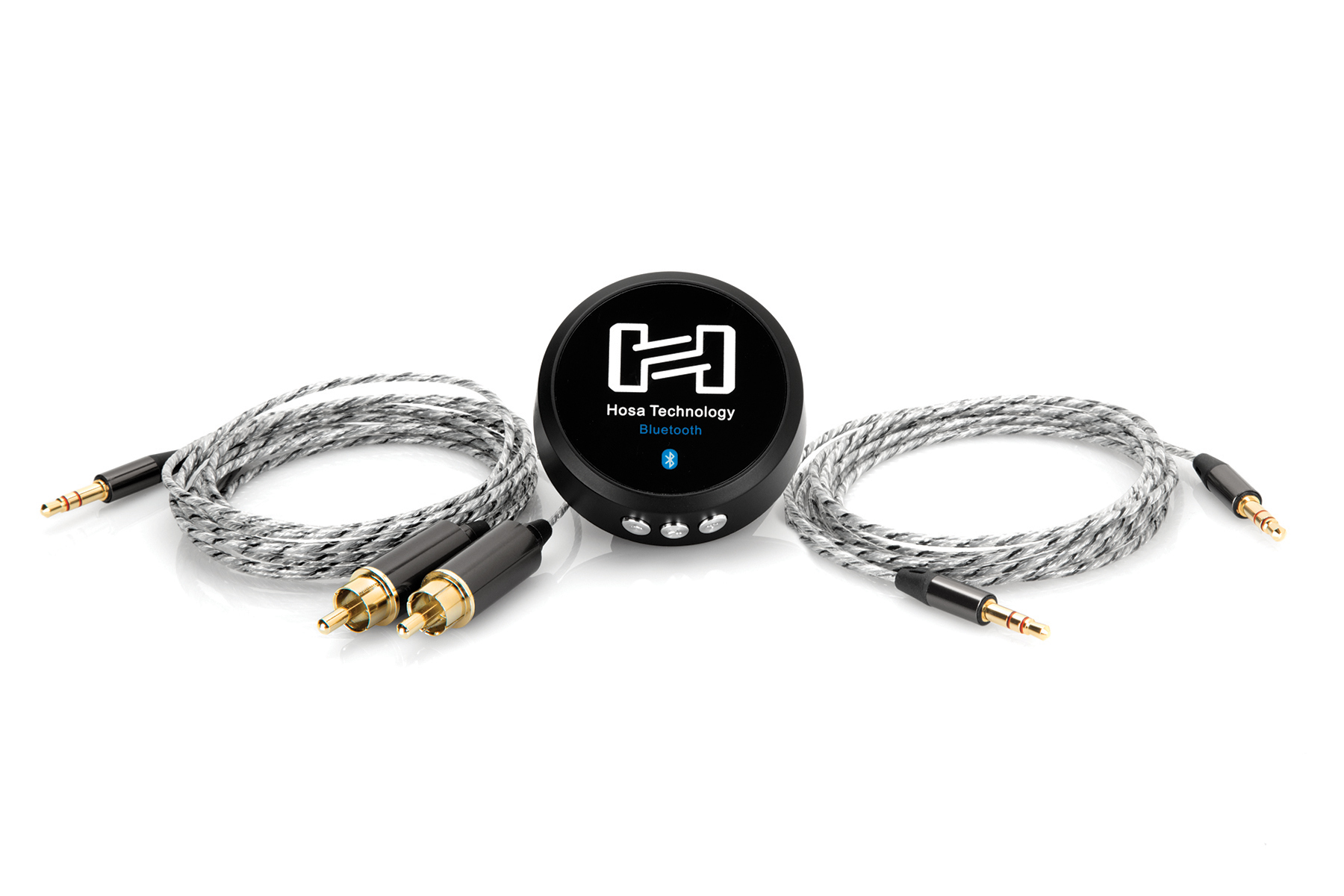
Buena Park, CA – January 2015… Hosa Technology, the leading innovator of analog and digital connectivity solutions for the modern musician, is pleased to introduce a new series of products designed to make it easier than ever for the worlds of professional and consumer audio to coexist: the Hosa Drive Series. Consisting of the Hosa Drive Bluetooth® Audio Receiver and a selection of portable cables designed to interface with everything from car audio systems to sound reinforcement and consumer audio playback systems, the new Hosa Drive Series takes music mobility to the next level.

The Hosa Drive Bluetooth Audio Receiver operates on Bluetooth Version 3.0 technology to wirelessly stream music from a source—such as a smartphone or other portable music player— to a playback system with minimal lag or signal loss. The Drive Bluetooth Audio Receiver includes built-in track controls for added convenience. Resembling a small hockey puck, the easy-to-transport receiver is the perfect solution for interfacing a music playlist with car stereo systems lacking Bluetooth connectivity. Similarly, the Drive Bluetooth Audio Receiver makes it easy to interface with the AUX or other input on a home audio setup, as well as connecting with a professional mixer or sound reinforcement system via the board’s input channels or 2-track returns. It’s the ideal product for accessing multiple devices without disconnecting and reconnecting any cables.

The Drive Bluetooth Audio Receiver plays music wirelessly for up to 10 hours and operates at transfer speeds up to 24 Mbps. The unit includes a 3.5 mm TRS aux cable for interfacing with external audio playback systems and a USB cable for charging. Pairing with smartphones and similar devices is quick and easy.

Hosa Drive Series cables are available in 3.5 mm TRS to Same and 3.5 mm TRS to Dual RCA in 1.5-, 3-, 6-, and 10-foot lengths. These cables feature connectors made to fit media players and smartphones—even phones in protective cases. The metal connectors and easy-to-coil wires make Hosa Drive cables ideal for today’s mobile lifestyle. Hosa Drive cables can travel in the car, a gig bag, or simply a jacket pocket—making it easy to establish an audio connection no matter where the road may lead.

The Hosa Drive Stereo Audio Cable (3.5 mm TRS to Same) is the perfect choice for automotive connectivity. The cable features slim 3.5 mm connectors for devices with protective cases and incorporates all-metal connector housings for added durability. Similarly, the Hosa Drive Stereo Breakout Cable (3.5 mm TRS to Dual RCA) provides the same slim 3.5 mm connector and all-metal connector housings for added durability. Both cables use Hosa’s Easy-Coil wire for tangle-free storage and travel.

Jose Gonzalez, Hosa Technology’s Product Manager, commented on the company’s new Hosa Drive Series products. “The Hosa Drive Series has been created for the mobile lifestyle and is ideal for people who take their music everywhere. This ranges from audio engineers and gigging musicians to the guy who simply wants to listen to music on the road. This is a versatile, compact solution that makes it easier than ever for the worlds of pro and consumer audio to intersect.”

The Hosa Drive Bluetooth Audio Receiver carries an MSRP of $54.95. The various Hosa Drive Stereo Audio Cables and Hosa Drive Stereo Breakout Cables range from MSRP $14.95 to $34.95, depending upon configuration and cable length. The Hosa Drive Series will become available Q1, 2015.

- Hosa

Hosa Announces Pro Breakout Cables

Streamlines the process of interfacing consumer audio with professional gear

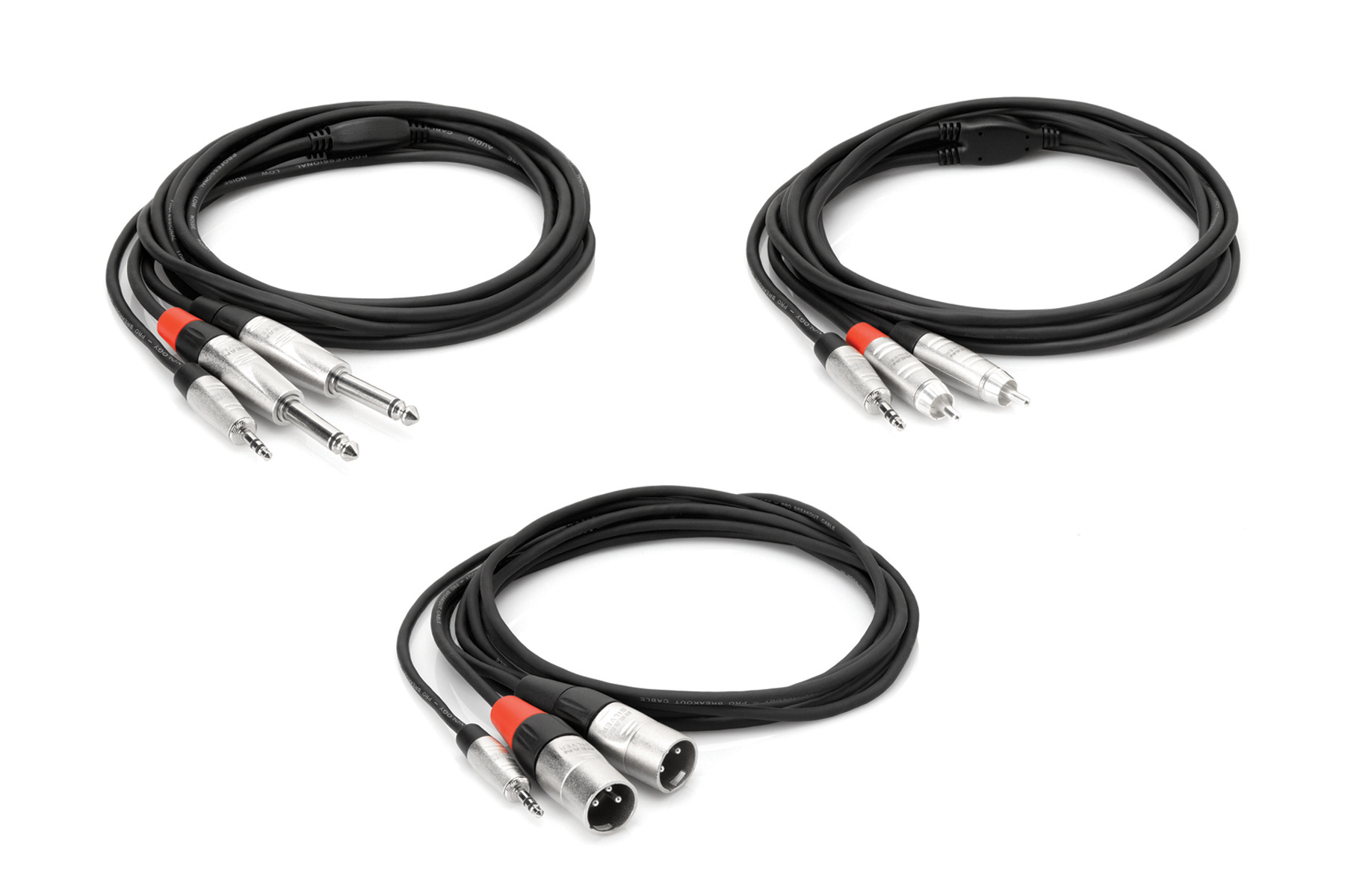
Buena Park, CA – November 2014… Hosa Technology, the leading innovator of analog and digital connectivity solutions for the modern musician, is pleased to introduce the latest line expansion to the Hosa Pro line of cables. The new Hosa Pro Breakouts make the process of interfacing consumer audio products with professional equipment easier than ever. With Hosa Pro Breakouts, any consumer audio product equipped with a stereo minijack output can seamlessly be interfaced with professional units sporting quarter-inch Tip/Sleeve, XLR, or even RCA connectors.

Hosa Pro Breakouts are available in three configurations. The 3.5 mm TRS (tip/ring/sleeve) to dual RCA option—identified as the HMR-000Y Series—is ideal for DJ mixers or home stereo systems. The 3.5 mm TRS to dual 1/4-inch TS (tip/sleeve) breakout—identified as the HMP-000Y Series—can be plugged into patch bays or a mixer’s phone inputs. The third category, the 3.5 mm TRS to dual XLR3M breakout—known as the HMX-000Y Series—is ideal for connecting into discrete channels on a professional mixer or similar interface.

As users of Hosa cable products have come to expect, the new Pro Breakouts line is manufactured from the finest materials. All three configurations utilize nickel-plated REAN connectors (a brand of Neutrik AG, the industry’s connectivity leader) for efficient signal transfer and durability. Equally notable, these cables sport 24 AWG Oxygen-Free Copper (OFC) conductors for enhanced signal clarity and 90% OFC spiral shields for a higher signal to noise ratio. These materials, combined with Hosa’s world-class workmanship, result in truly superior cable products designed to provide exceptional audio performance and years of trouble-free use.

Jose Gonzalez, Hosa Technology’s Product Manager, commented on the company’s new Pro Breakout cables, “The growth of portable audio products such as iPods, smartphones, and tablets has changed the requirements of live audio. Even in the most professional live audio and studio setups, people frequently need the ability to add a consumer media player into the mix. When this situation arises, they need to be able to count on the cable they’re about to patch in. Hosa Pro Breakouts make trusting one’s cable easy. All three configurations make the process of interfacing consumer audio products with professional gear quick and seamless.”

The HMR-000Y and HMP-000Y Series are available now and include their respective cables in 3-, 6-, and 10-foot lengths. The dual XLR3M HMX-00Y Series will be available January 2015, in 3-, 6-, 10-, and 15-foot lengths. MSRP pricing ranges from $16.65 to $29.10, depending upon the cable’s connectors and length.

- Hosa

2014 Audio Engineering Scholarship Recipient

Buena Park, CA – October 2014… Hosa Technology, the leading innovator of analog and digital connectivity solutions for the modern musician and audio/video professional, is pleased to announce the recipient of the 2014 Hosa Technology Audio Engineering Program Scholarship at Musicians Institute (MI) in Los Angeles. The scholarship—now in its second year—is awarded to a new student enrolling in the MI Audio Engineering Program who clearly articulates their career goals in the music industry, as well as why they should be considered for the scholarship, in a 500 word essay. This year’s award recipient is Danica Renee Garcia of Santa Paula, CA.

The Hosa Technology Audio Engineering Program Scholarship is available to students enrolled in the Audio Engineering Program only. The award constitutes a $1,000.00 tuition credit ($1,000.00 per quarter for the first quarter of the program, as long as the recipient maintains satisfactory progress). The scholarship recipient will also receive a voucher for $250 worth of Hosa products at retail value. The recipient of the Hosa Technology Audio Engineering Program Scholarship must maintain full-time enrollment status (12 units) during the full length of the award period.

Asked why she chose to study in the Audio Engineering Program at MI, Danica states, “My education has always been extremely important to me. Knowing that MI has a 12:1 student to teacher ratio is one of the main points that sold me on MI. The teaching staff is incredible and the quality of education is phenomenal. They set you up for nothing but success and all you have to supply is the effort and drive. And that is what makes MI one of the most unique schools in my eyes; it’s why I invested my future here. I absolutely adore the vibe around campus, the networking and connection opportunities, and the fact that everyone there is also chasing their biggest dream with no boundaries, the possibilities are limitless.”

Garcia’s eventual plans include pursuing her dream of scoring a movie and dubbing audio into a music video or TV show. She also hopes to open her own recording studio one day, be a lyricist, and also tour the world. “I have many dreams and aspirations,” states Garcia, “and MI is the school I trust to set me up for success.”

Mayumi Martinez, CEO of Hosa Technology, commented on Garcia’s winning of the Hosa Technology Audio Engineering Program Scholarship. “We are delighted that Ms. Garcia has been selected as the winner of this year’s scholarship. Musicians Institute is a vital link in the education of up and coming musicians and audio engineers, and we are very pleased to be helping her as she works toward her goal of a career in music and audio. I believe our participation in this endeavor allows us to give back to the community while investing in the next generation of music and audio professionals. We look forward to a long, mutually beneficial relationship with Musicians Institute and wish Ms. Garcia the very best.”

- Hosa

Meet the Team: Maria

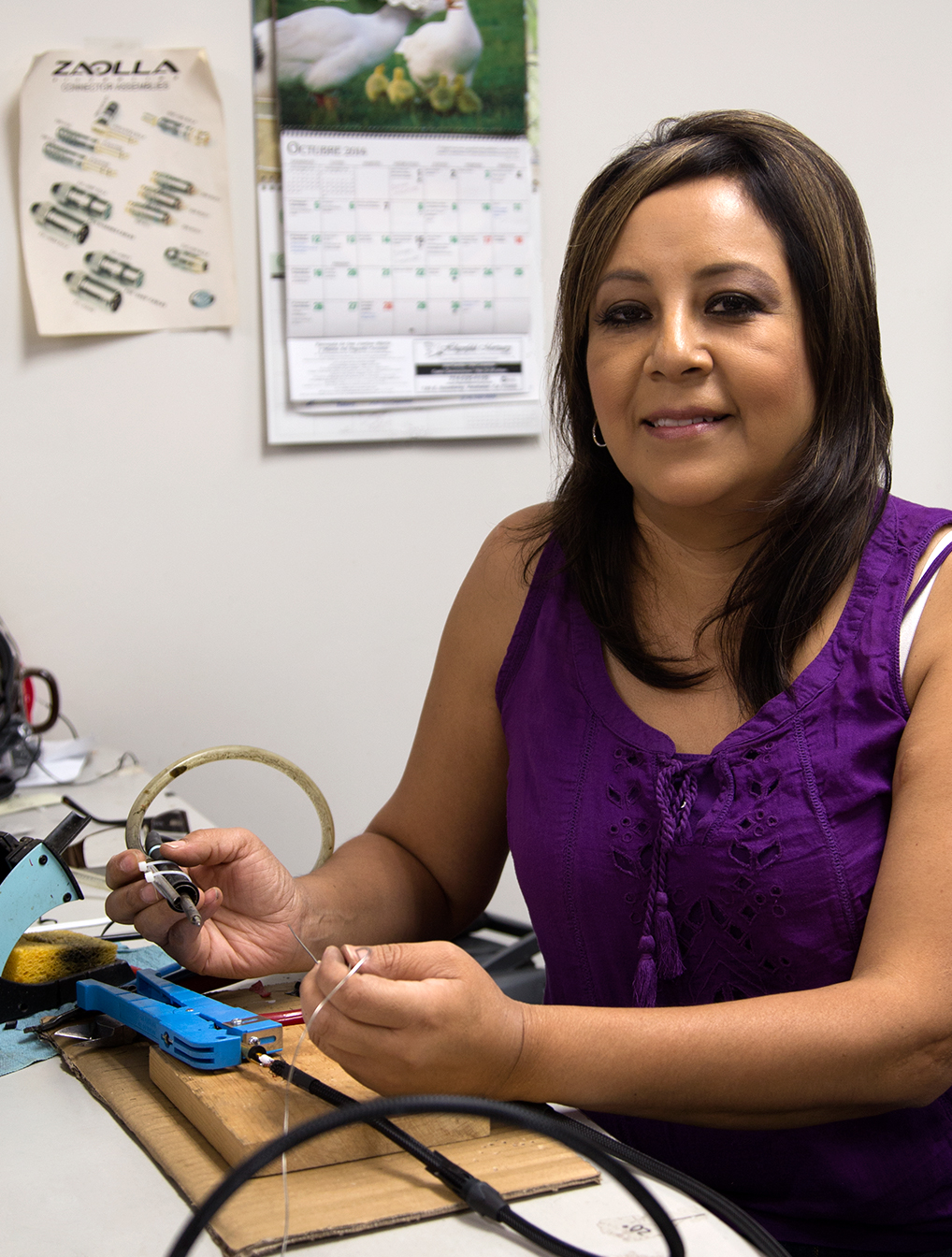
Name: Maria Andrade

How long have you worked at Hosa?
19 years

What is your current position?
Lead Electronic Assembler

Tell us a little bit about your job.
I personally assemble, modify, or repair various types of audio cables. I also prioritize and delegate work orders to a small team of assemblers, while inspecting all finished goods produced by the Assembly department.

What did you do before joining Hosa?
Before joining Hosa I had an office job with Pacific Theatre.

How would your coworkers describe you?
I think my coworkers would describe me as friendly, very helpful, and hard-working.

What do you like to do outside of work?
I enjoy going to Zumba class and also cooking for my children.

What music are you currently listening to?
I mainly listen to Cumbiás.

What was the last concert you saw?
The last few concerts I saw were El Recodo and Marco Antonio Solís.

What’s your favorite…
TV show? Marimar and other telenovelas
Food? Enchiladas
Place you’ve been? Mexico
Hosa product? I don’t have a favorite, I like them all!

How has Hosa changed over the years?
When I first started, the company was very small. We only had two assemblers, a few warehouse workers, and a couple people in the office. There were a lot fewer customers back then, so there weren’t nearly as many assembly orders. As the company grew, the product line also expanded. I quickly learned how to assemble all sorts of different cables and work with various materials, including optical cables. In my 19 years, I’ve seen people and even technologies come and go, but Hosa continues to move forward and improve each year.

What do you enjoy most about working at Hosa?
While I very much like my job making cables, the thing I enjoy most is the people. The owners have always been very good to me and I like the people I work with. In fact, I have always viewed Hosa as my second home. When I come to work each day and look around me, I don’t see managers and coworkers—I see family.

- Hosa

Balanced Cables vs. Unbalanced Audio Cables:

Choosing the Right Connection

A noise-free signal chain is the foundation of any professional recording or live performance. At Hosa, we provide the technical expertise and reliable connectivity required to protect your audio from external interference.

The Core Difference: Signal Integrity

External interference (noise) is the enemy of a clean signal. While unbalanced and balanced cables both carry audio, they handle the environment differently. Selecting the correct format ensures your creative work is never compromised by unwanted hum or buzz.

Finding the Right Fit

Your gear determines your cable needs. While unbalanced cables are the standard for instruments like guitars, professional microphones and studio monitors require a balanced connection to eliminate noise over longer distances. Always verify your equipment’s requirements to ensure you are using the optimal signal format.

What are Unbalanced Cables?

Unbalanced cables utilize a two-wire system: a signal wire and a ground (shield) wire. To maintain signal purity, these should be kept to short lengths—typically under 15–20 feet—to prevent the cable from acting as an antenna for external electromagnetic interference.

TS (Tip-Sleeve) & RCA Connectors

These are the most common unbalanced connections found in both professional and creative gear:

  • TS (Tip-Sleeve): Named for its two internal contact points—the Tip (which carries the signal) and the Sleeve (which serves as the ground and shield). Identified by a single black insulator ring, these “instrument cables” are the standard for guitars, bass, and unbalanced keyboards.
  • RCA Connectors: These are the universal standard for DJ equipment, consumer electronics, and home audio systems. They are also vital for connecting audio interfaces to certain types of desktop monitors or legacy outboard gear.
Need a reliable instrument or playback connection?

Explore our Essentials and Pro series for rugged, high-fidelity TS and RCA solutions.

Shop Unbalanced Cables


The Balanced Standard: Noise-Free Performance

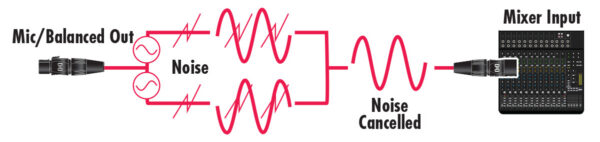
Balanced audio is the professional choice for maintaining signal purity over long distances. By utilizing a phase-cancellation design, balanced cables actively “reject” external noise, ensuring that your audio remains pristine from the source to the interface. This is essential for microphones and critical studio interconnects where any level of interference is unacceptable.

Elite Signal Transparency

For high-stakes recording and production, our Hosa Edge series utilizes Oxygen-Free Copper and Neutrik® connectors to ensure your signal path remains professional, uncolored, and entirely transparent.

View the Hosa Edge CMK Series →

XLR & TRS Connectors

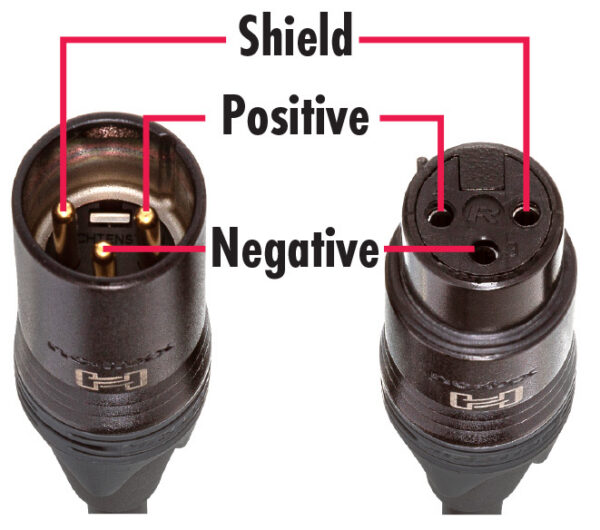
Professional gear relies on two primary balanced connectors, both of which utilize three conductors to carry “hot,” “cold,” and “ground” signals:

  • TRS (Tip-Ring-Sleeve): These 1/4-inch plugs feature an additional metal contact called the Ring, situated between the Tip and Sleeve. Identified by two black insulator rings, they are used for balanced line-level connections to monitors, headphone outputs, and stereo signals.
  • XLR: While the locking 3-pin standard is synonymous with microphones, it is also the preferred connection for powered studio monitors, mixer outputs, and long interconnect runs.

Choosing Your Connection

Deciding between balanced and unbalanced cables isn’t just about the cable itself—it’s about the input and output ports of your gear. If you are plugging a high-output instrument like a guitar directly into an amplifier, an unbalanced TS cable is the standard. However, if you are connecting a microphone or studio monitors to an audio interface, using a balanced XLR or TRS connection is vital to preventing the hum and buzz often caused by nearby electronics and long cable runs.

Use the table below as a quick-reference guide to match your application with the correct professional solution.

Application Cable Type The Solution
Guitar/Keys to Amp Unbalanced (TS) Shop Instrument Cables
Microphone to Interface Balanced (XLR) Shop Microphone Cables
Studio Monitors Balanced (TRS) Shop Interconnects

Don’t Let the Wrong Cable Compromise Your Sound

The right connection makes the difference between a pristine signal and unwanted noise. Since 1984, Hosa has provided the reliable, lifetime-guaranteed solutions musicians trust to keep their focus on the performance.

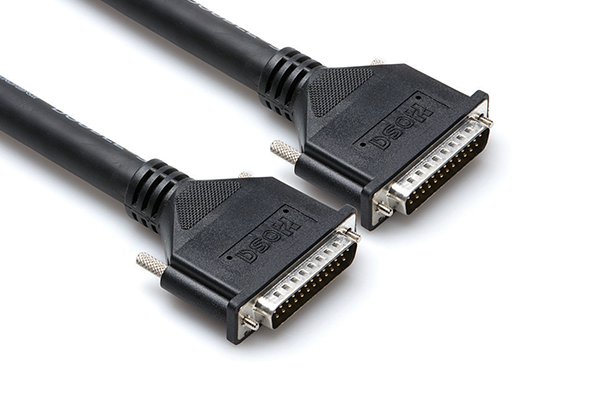
How to Properly Connect the DB-25 Jack on Your Audio Device

Many times, people look at the jacks on the back of a device to figure out what cables they will need. While this is not really the best way to figure things out, most of the time it will get results. If you see an RCA jack and ask for an “RCA cable”, you’ll probably find a suitable cable (though there are different types of cables that use the RCA connector). But if you don’t get a little more information, you’ll most likely run into trouble when you see a DB-25 jack on the back of your audio device.

DB-25, or D-sub, connectors were originally created for computer applications. The audio industry adopted the DB-25 as a way of getting multiple channels in and out of devices while taking up minimal space. In this regard, the DB-25 connector works great. However, the use of this connector is problematic because there is not one universally accepted way of wiring it. In fact, there are three widely used wiring conventions when it comes to DB-25 in the audio world.

Some devices use D-sub connectors as a way of inputting or outputting eight channels of balanced analog audio. Each balanced channel requires three pins—one for the positive signal, one for the negative, and one for the shield—and each channel is grouped in a triangle pattern by taking two pins from one row and one pin from the other. Eight channels require 24 pins and pin 13 is simply not used. The Hosa DTM-800 series balanced snake is wired this way. It connects to the DB-25 output and breaks out to eight XLR male connectors. The Precision 8 mic preamp by True Systems uses a DB-25 connector to output all eight channels. This makes it possible to run a single cable with eight channels to an audio interface or mixer.

Professional audio devices can also use one DB-25 connector for eight channels In & Out (I/O) using the AES3, or AES/EBU, format. This digital audio format enables devices to send two channels of audio along one balanced audio line. This is where it really gets fun, as there are two standards for AES/EBU multi-channel I/O—and manufacturers choose which one to use.

The first is known as the Tascam wiring standard. The Tascam wiring standard is the same as the analog standard at the DB-25 connector end. The wire, however, must be different, as it is not passing analog sound. The AES3 specification requires 110-ohm balanced cabling for AES/EBU signals. Unlike analog snakes, AES/EBU snakes carry two digital channels on each balanced line. This means through one DB-25 snake, the device can send eight channels and receive eight channels simultaneously. If you are using a digital snake that breaks out to XLR connectors, it will have four male and four female XLR connectors instead of four like connectors on the analog snakes. Avid and Universal Audio are two companies using the Tascam standard. Avid’s ProTools HD I/O uses AES/EBU via a DB-25 jack.

Companies such as Apogee and Mackie, among others, have adopted the Yamaha wiring standard for their AES/EBU I/O. The wire is the same as that used for the Tascam digital snakes but the pin configuration is much different. In this case, the ground wires are on one side of the connector, while the other side gets the conductors. The Lynx Aurora 16 AD/DA converter uses AES/EBU with the Yamaha standard.

Note that if you are connecting two digital devices, you must make sure to use the correct pinout for each. If one of your devices uses the Tascam standard for its AES/EBU I/O and the other uses the Yamaha standard, you can still use them together. You must, however, use a snake with the Tascam pinout on one end and the Yamaha pinout on the other. Analog to digital is not as simple. You cannot use a DB25 snake to interconnect AES/EBU and analog signals. This would require a separate interface, which is a topic for another discussion.

The next time you turn to the back of your device for cable answers, remember the connector type is not everything—especially with DB-25. Your first question should be whether you’re looking at an analog or digital connection. If it’s digital, the next step is to figure out the wiring standard the device uses. Taking these steps will decrease headaches down the road and ensure you purchase the right DB-25 snake the first time.

- Jose